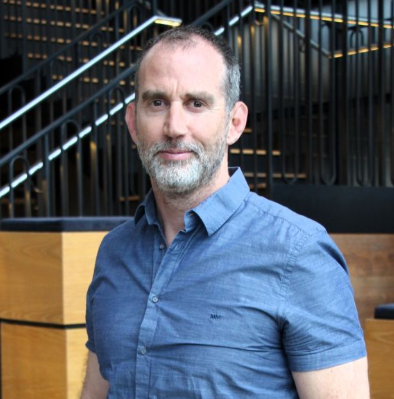

For the past five years I have been the Chief Scientist of Microsoft's R&D Center in Israel. It sounds a bit like I'm walking around in my pocket with a set of test tubes or a miniature particle accelerator, but in practice my main task is to arouse curiosity among our engineers, so that they will not only stay on the wheel but invent the next one. It's hard for me to think of a more enjoyable job than this, I just really love what I do.
It's a job that requires you to be endless optimistic: I have to try to analyze with scientific tools where the world will be a decade from now, to cut back on what tasks need to be done today in order to be ready, and to enlist our employees and development teams to work in that direction.
Some would say it's presumptuous to plan so far when we're all immersed in our daily work, but Oscar Wilde put it nicely: 'We're all in the mud, but there are those who are still looking at the stars.' And that's exactly what I aspire to – to encourage people to look forward, high, far.
My way of doing this is to initiate practical things: to set up bootcamps for employees on quantum computing, to train them in-house on new research literature in the field of AI, to flood experimental technology development teams with experimental technologies that might be able to turn into breakthroughs, to just open their minds. And at the same time, also to represent Microsoft on the outside – and to build collaborations with Israeli startups and academia, because Microsoft is not a single tree, it is part of the Israeli ecosystem.
We are living in an amazing time in terms of technology, really. Everything suddenly seems so accessible and easy, but the people who will succeed in the coming years and take their careers forward will be the ones who will remain actively curious. We need this friction with the world. Even if artificial intelligence knows how to answer questions, the future belongs to those who will not stop asking them.
(Dr. Tomer Simon is the Chief Scientist of Microsoft Israel Research and Development)
Tomer Simon, PhD
AI Insights from Microsoft Israel’s Chief Scientist